 由 Yaming
 LED Lamp Assembly Line
Introduction to the Assembly Line System
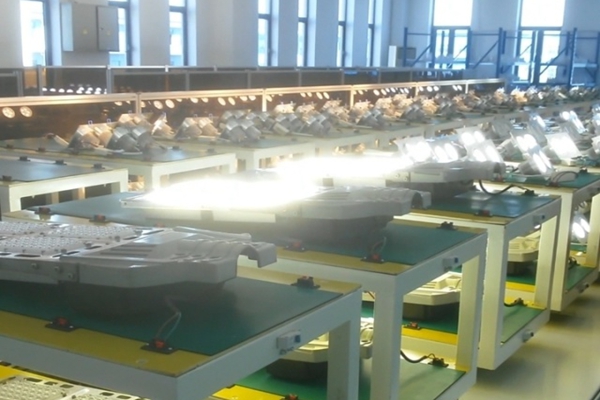
The image shows a sophisticated LED lamp assembly line in a modern factory. This system represents the latest advances in solid-state lighting production. The assembly line uses a modular workstation design where LED luminaires move through sequential processing stages. Each stage addresses specific assembly and testing needs for LED manufacturing.
LED assembly differs from traditional lamp production. It requires exceptional cleanliness, electrostatic discharge protection, and precise thermal management. The facility layout reflects these requirements through organized workstations, controlled conditions, and integrated quality checks.
Modular Workstation Architecture
The assembly line uses a pallet-based conveyor system. Each workstation functions as an independent cell connected through synchronized material flow. Every workstation has a green-topped platform that serves as both an assembly surface and a testing station. This palletized approach offers clear advantages over continuous belt systems. Products can be precisely indexed at each station, rotated for multi-angle access, and held securely during delicate operations like driver board installation or lens alignment.
Workstation spacing follows takt time analysis to ensure balanced operations. This prevents bottlenecks and maximizes overall equipment effectiveness. Yellow safety markings on the floor define walkways and material staging zones. These markings separate production activities from logistics operations to improve safety and efficiency.
The elevated platform design provides ergonomic working heights that reduce operator fatigue. The open understructure allows convenient routing for electrical utilities, compressed air lines, and data cables needed for assembly tools and test equipment.
In-Process Testing and Quality Integration
A key feature of this assembly line is functional testing integrated directly into production flow. The illuminated LED units in the image show burn-in or photometric testing happening during assembly. This inline testing detects performance issues like color temperature deviations or driver malfunctions immediately. Corrective action can then occur before adding more value to non-conforming products.
Each workstation likely includes programmable power supplies, spectroradiometric sensors, and thermal monitoring equipment. These systems verify critical parameters such as forward voltage, color rendering index, correlated color temperature, and thermal resistance. Test data feeds into statistical process control systems for real-time monitoring and predictive maintenance.
Multiple units under test at the same time demonstrate parallel processing that boosts throughput without sacrificing inspection quality. This approach builds quality into the process rather than inspecting it afterward.
Component Staging and Material Logistics
The background shows organized component storage systems essential for uninterrupted production. LED lamp assembly uses many specialized parts including aluminum substrates, LED chips, optical lenses, thermal interface materials, drivers, and housings. Each component type needs specific handling protocols. Electronic parts require ESD protection. Optical elements need contamination prevention. Thermal materials require dimensional stability.
The material staging strategy follows lean principles, likely using kanban replenishment where consumption triggers resupply. This just-in-time approach minimizes work-in-process inventory while preventing material shortages that would disrupt production.
The tall windows and natural lighting contribute to energy-efficient operations and comfortable working conditions. This aligns with the sustainable ethos of LED technology itself.
Thermal Management and Assembly Precision
LED manufacturing places strong emphasis on thermal management, which directly determines product longevity and performance. The assembly line must handle precise application of thermal interface materials, accurate heat sink mounting, and thermal pathway verification. Workstation fixtures likely include specialized tooling for consistent thermal contact pressure and uniform compound distribution.
The assembly sequence progresses through several stages. Substrate preparation comes first. LED module mounting follows. Then comes electrical interconnect soldering or press-fitting. Driver installation, optical assembly, and final housing integration complete the process. Each stage requires specific expertise and tooling.
Digital Integration and Industry 4.0 Connectivity
Modern assembly lines increasingly use Industry 4.0 connectivity where equipment communicates through industrial networks. This LED assembly line likely features PLC systems managing conveyor indexing, workstation signaling, and test automation. This digital infrastructure supports traceability by recording component origins, operator actions, and test results at each stage.
Such traceability is essential for warranty management, regulatory compliance, and continuous improvement. When field failures occur, manufacturers can analyze production records to find root causes and implement corrective actions.
Conclusion
This LED lamp assembly line represents more than a collection of workstations and conveyors. It forms a comprehensive manufacturing system where mechanical precision, electronic sophistication, and optical engineering converge through orchestrated processes. The facility design reflects deep understanding of LED requirements including thermal management, electrostatic protection, photometric verification, and component traceability.
As solid-state lighting continues replacing conventional technologies globally, assembly lines like this provide critical infrastructure for that transition. The engineering principles evident here, including modular flexibility, inline quality verification, ergonomic optimization, and digital integration, define the standard for advanced manufacturing in the lighting industry. Through such precision-engineered systems, manufacturers transform innovative LED technology into reliable products that illuminate spaces while advancing energy efficiency and sustainability.
If you have any questions or needs about the automated assembly line, please contact us via email: [email protected]