 由 Yaming
 Full analysis of electricity meter box assembly line production
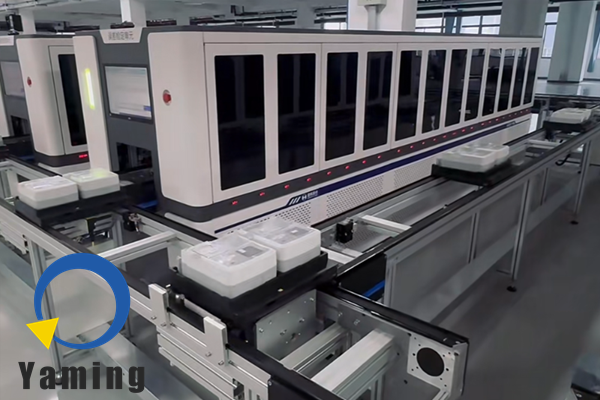
The electric meter box assembly line is the core of electrical equipment manufacturing. It uses automated series stamping, welding, assembly, and testing, and uses process division, continuous circulation and quality control to achieve efficient and standardized production, adapt to the needs of multiple scenarios, and help the power supporting industry reduce costs and improve efficiency.
1. Process closed-loop: from design to finished product
(1) Precise design Combined with the use scenarios (outdoor/indoor, number of tables), CAD is used for structural and electrical design, and the strength is guaranteed through mechanical simulation (metal box compression resistance ≥1500N, plastic box impact resistance complies with GB/T 14436), and heat dissipation, grounding and other details are reserved.
(2) Materials and processing Material selection: ABS plastic (weather-resistant to-40℃~80℃) is selected outdoors, and galvanized cold-rolled steel plate (thickness 1.2 – 1.5mm) is used for industrial scenes. Processing: Plastic parts are molded by “one mold and multiple cavities” by automated injection molding machines (tolerance ±0.3mm); metal parts are punched by CNC punch and folded by bending machines (angle error ≤1°) to ensure accuracy.
2. Core of the assembly line: automation collaboration
(1) Equipment linkage Integrated injection molding machine, stamping machine, and collaborative robot: After plastic shell injection molding, the robot grasps the parts and codes the code; the metal skeleton is stamped and formed, the welding robot spot welding (solder joint diameter is 3 – 5mm, strength is ≥80N/mm), and the PLC linkage beat is 12 – 15 seconds/piece, compression cycle.
(2) Division of work processes Processing station: Visual inspection (accuracy 0.1mm) to eliminate out-of-tolerance parts; Assembly station: Assemble according to anti-wrong material rack, and use pre-insulated terminal wiring to prevent false connection; Test station: withstand voltage (2000V/1 minute) and ground resistance (≤0.1Ω) test to automatically determine performance.
3. Management system: balance between quality and flexibility
(1) Full process quality control Inspection stations are set up at key nodes: laser measurement of size after punching, current/time monitoring during welding, salt spray of finished products (simulating 30-day corrosion), IP protection testing, and data uploading to MES for traceability.
(2) Flexible production Relying on fast mold change + MES scheduling to adapt multiple models: fast mold change (≤15 minutes), MES dynamically allocates tasks and adjusts parameters according to order priority, supporting “multiple varieties and small batches” delivery.
4. Value implementation
The assembly line increases the production efficiency of electricity meter boxes by 40%, reduces costs by 35%, and controls the defective rate by 0.5%. It shifts from “manual and *tered manufacturing” to “intelligent and intelligent manufacturing”, adapting to the customization needs of power grids such as batch and new energy, and renovation of old communities., laying the foundation for the large-scale development of the power equipment industry.
If you have any questions or needs about the automated assembly line, please contact us via email: [email protected]