由 Yaming
 1. Overall Introduction
A complete automotive automation assembly line isn’t a single device. It consists of multiple systems working together. Each undertakes key production links.
2. Conveyor System: “Vein” for Uninterrupted Component Transport
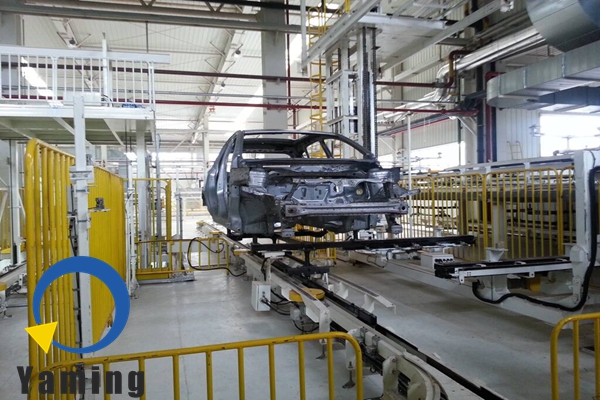
The conveyor system acts as the “vein” of automotive production lines. Common types include suspended conveyor chains and ground – rolling conveyor lines. They flexibly adjust to model sizes and production rhythms. It accurately transports key components (e.g., body, chassis) to stations. This ensures continuous, uninterrupted production. For example, in car manufacturing, it enables seamless body transfer across welding, painting, and final assembly workshops.
3. Automated Operating System: Robot – Driven “Executor” for Precision
The automated operating system is the assembly line’s “executor”. It centers on industrial robots (welding, assembly, spraying robots, etc.). Take welding as an example: Robots use high – precision sensors for automated body weld welding. Error stays within 0.1mm (far better than manual welding). They complete 30–50 welds per hour, boosting efficiency 3–5 times.
4. Inspection & Quality Control System: “Eyes” for Flawless Production
The inspection and quality control system is like the “eyes” of the automotive line. It integrates vision inspection, laser measurement, and pressure sensing. After final assembly, it auto – detects: paint surface appearance, component positions, and power system performance. For instance, vision cameras catch paint scratches (0.02mm accuracy). Problems trigger immediate alarms to stop unqualified products entering the next stage.
5. Data Management System: “Brain” Optimizing OEE
The data management system is the “brain” of automotive automation. Based on industrial Internet tech, it collects real – time production data (equipment status, progress, qualification rates). It optimizes parameters via big data analysis. For example, if an assembly robot slows, the system warns in advance and pushes maintenance plans. This cuts downtime and keeps the production line’s OEE above 85%.